Early-stage investing has always been a network activity. Few angel investors have the time, expertise, or deal flow to build a strong portfolio entirely on their own. At the same time, startups rarely want to manage dozens of individual investors around their cap table.
Syndication solves this problem. Instead of investing alone, a group of investors coordinates around promising opportunities. One or several experienced investors identify a company, share the opportunity with their network, and support the investment process. Individual investors then decide independently whether to participate.
For startups, the result is a clean and coordinated investment round. For investors, syndication combines shared expertise, stronger due diligence, and access to better deal flow. Over the past decade, this model has become one of the defining features of early-stage investing across Europe and the United States.¹
In Switzerland, however, syndication raises an important question: «When does coordinating investors become a regulated financial activity?» Understanding this distinction is essential for anyone organizing or participating in investment networks.
Coordination vs. Control
From a regulatory perspective, the key distinction is straightforward. If a deal lead coordinates investors, the activity is generally not regulated. If the deal lead controls investor capital or makes investment decisions on behalf of investors, the activity may fall under financial supervision.
Swiss financial regulation therefore focuses less on whether investors collaborate and more on who ultimately makes the investment decision.
In a typical angel syndicate, investors remain fully autonomous. Each participant evaluates the opportunity independently and decides whether – and how much – to invest. The deal lead facilitates access to the opportunity but does not manage investor capital.
Under this structure, the deal lead acts as a connector within an investment network rather than a financial intermediary managing assets.
When Regulation Can Arise
Regulatory questions typically emerge in three situations.
A. Asset Management
If a person or organization manages investment decisions on behalf of investors – for example by controlling pooled capital or exercising discretionary authority – the activity may qualify as acting as an asset manager within the meaning of Art. 17 para. 1 FinAI.
Asset managers are financial institutions under Art. 2 para. 1 lit. a FINIG and therefore require FINMA authorization pursuant to Art. 5 para. 1 FinAI.
B. Collective Investment Schemes
A second issue arises when capital from multiple investors is pooled into a common investment structure where investors no longer make individual decisions.
Such arrangements may qualify as collective investment schemes, defined as assets raised from investors for collective investment and managed for their account according to a defined investment policy.³
Structures falling under this definition may require regulatory approval and ongoing supervision.
C. Investment Advice
The provision of investment recommendations regarding financial instruments may qualify as a financial service within the meaning of Art. 3 lit. c of the Swiss Financial Services Act (FIDLEG) and may therefore trigger registration requirements and conduct obligations.⁴
Such situations differ fundamentally from a typical angel syndicate, where investors merely receive access to an investment opportunity and subsequently decide independently whether, and to what extent, they wish to participate.
D. Why Structure Matters
For investor networks, the way a syndicate is structured therefore matters greatly. A robust syndication model typically follows several principles:
-
- investors decide independently whether to participate in a deal
-
- capital is not pooled before the investment decision is made
-
- the deal lead does not exercise discretionary control over investor funds
-
- investment opportunities are presented transparently to the network
Under these conditions, the network functions as a platform for collaboration and deal discovery rather than as a regulated asset manager.
Key Principles for Deal Leads
To ensure that a syndication model remains Within the established regulatory framework, experienced deal leads typically follow a few simple principles:
A. Present opportunities – do not manage capital
The deal lead introduces the opportunity but never controls investor funds.
B. Ensure independent investment decisions
Each investor decides individually whether to participate and how much to invest.
C. Avoid pre-pooled capital
Pooling funds before investment decisions can create regulatory risks.
D. Provide transparency, not recommendations
Deal materials should inform investors, not prescribe individual investment strategies.
Why Sector-Specific Investor Networks Matter
Syndication becomes particularly powerful when it happens inside specialized investor communities.
In complex sectors such as health technology, evaluating early-stage companies requires expertise in areas such as:
-
- Clinical validation
-
- Regulatory approval pathways
-
- Reimbursement models
-
- Hospital procurement processes
Generalist investors may be able to provide capital. But specialized networks can provide capital, expertise, and access to industry stakeholders simultaneously.
This combination often determines whether a HealthTech startup successfully reaches the market.
How MEDKAP Applies This Model
MEDKAP was created to build exactly this type of specialized investment community for health technology. The organization operates as a non-profit angel investor club focused exclusively on HealthTech. Its members include physicians, healthcare executives, entrepreneurs, and experienced investors who share domain expertise in medtech, diagnostics, and digital health.
Startups present their projects during curated pitch events. Following these presentations, members can indicate their interest and decide individually whether to participate in a potential investment round.
This structure ensures that:
-
- Investment decisions remain entirely with individual investors
-
- No investor capital is pooled or managed by the organization
-
- MEDKAP acts as a connector within the HealthTech ecosystem rather than as a financial intermediary
Operational aspects of investments – including transaction handling and compliance processes – are supported by specialized infrastructure providers for private market transactions.
The result is a model that combines efficient syndication with regulatory clarity.
Trust as the Foundation of Investor Networks
Syndication relies on more than structure alone. It depends on trust between investors, founders, and ecosystem partners.
Investor communities function best when participants follow clear principles:
-
- Transparency when interacting with startups
-
- Confidentiality regarding investment opportunities
-
- Respect for the collective nature of the network
-
- Constructive feedback for founders and fellow investors
These norms allow a group of individuals to function as a coordinated investment community rather than as a collection of isolated actors.
A Collaborative Model for Early-Stage Investing
Early-stage investing works best when investors combine their strengths.
Syndication allows experienced investors to share opportunities with their network, enables smaller investors to participate in promising companies, and provides startups with coordinated funding and meaningful support.
When structured correctly, this model remains fully compatible with Switzerland’s regulatory framework.
Investor communities such as MEDKAP demonstrate how domain expertise, collaboration, and careful structuring can create an environment where startups, investors, and industry partners benefit simultaneously.
In sectors as complex as health technology, such ecosystems are often the difference between promising ideas and successful companies.
Closing Remark
Switzerland offers many of the right ingredients: talent, funding, IP strength and regulatory clarity. Yet capitalizing on this moment will take more than favorable trends. Angels, VCs, corporates and public actors must work together to turn scientific and entrepreneurial promise into companies that scale – and stay. The window is open.
If you want to stay updated on Angel Investing in HealthTech at MEDKAP, please
-
- subscribe to our newsletter
-
- subscribe to our LinkedIn page.
About the author
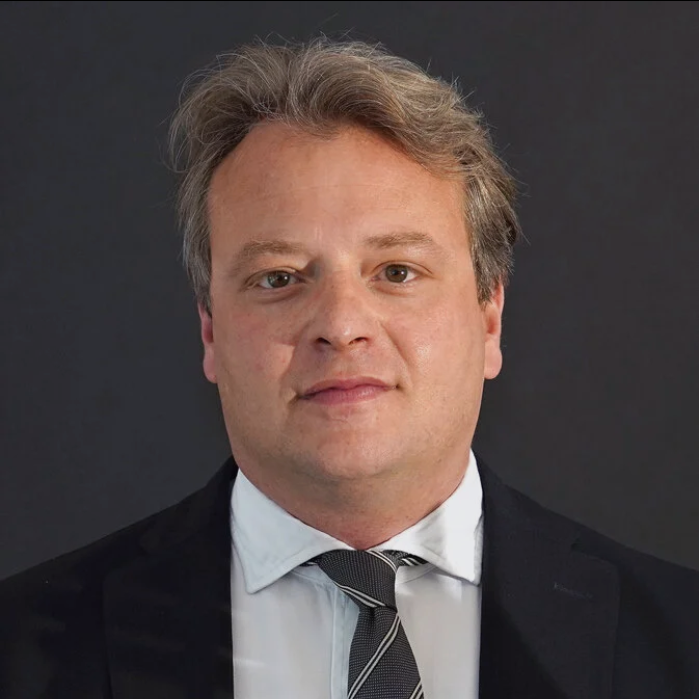
Maximilian Diem: Dr. jur. Maximilian Diem is a distinguished legal expert and entrepreneur recognized for competition law and corporate financial transactions. Maximilian is the founder of IXAR, a specialized law firm that achieved immediate recognition as a “Top Law Firm” in the prestigious Bilanz rankings. As a co-founder of the MEDKAP Investor Association, he was instrumental in designing the non-profit’s syndication model to ensure it remains within the Swiss regulatory framework for financial activities.